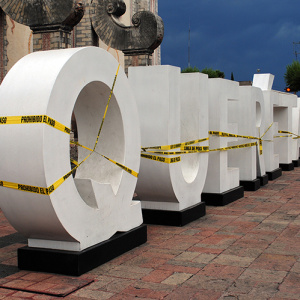
Guanajuato & The Magic of San Miguel de Allende
Mexico, February 2020
By no reasonable measure can we truly be called tourists – we don’t stay in hotels, we don’t rent cars, we barely buy curios and with very few exceptions, we walk wide circles around tourist attractions. No, ours is more of an infiltration-based travelling, we like moving in and settling in a neighbourhood and slowly getting to know the place one walk, one shop, one person at a time.
No wonder then that our tour with my sister and friends felt like an actual vacation, even within the larger holiday that is our attitude to life. It had all the hallmarks of a paperback adventure with plenty of surprises, lots of exploring, elaborate meals, a madly explosive birthday party and just the right sprinkle of drama.
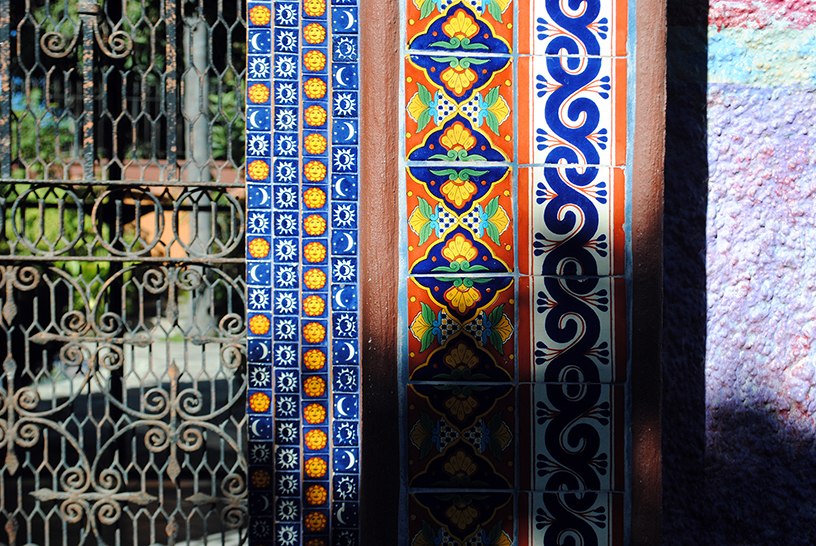

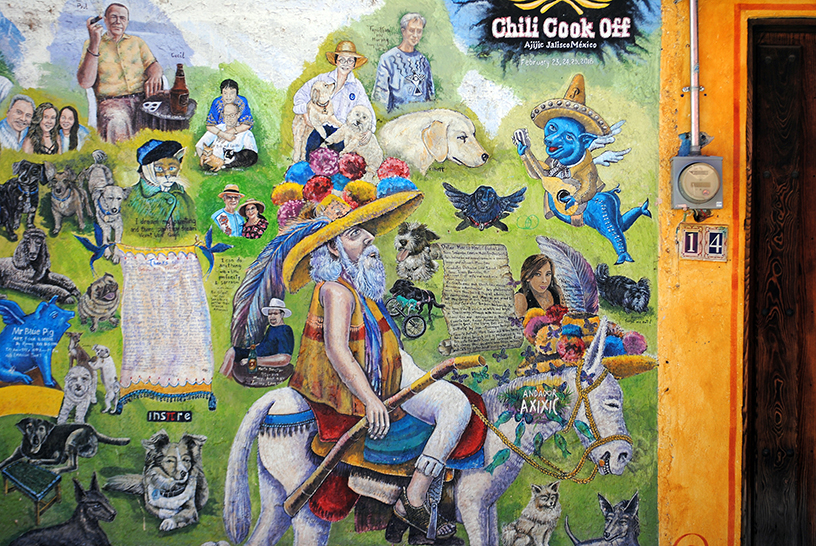
We meet with great joy and excitement in a flurry of hellos and little shrieks over snacks and a long-suffering pack of tennis biscuits that had travelled the many miles from home in a sheath of bubble-wrap. We take to the streets, tripping and flailing like a troop of monkeys freshly out of the cage, in an attempt to find dinner, even though it is already approaching midnight. Guadalajara unfolds before us as if for the first time, bouncing with light and revealing the monumental buildings of the centre in all their night-time finery. Our Mexican friend (a man of the theatre) gives freely of his wisdom, local knowledge and superior ability to steer us towards the most breathtaking and most culturally significant sites. For the first time we can gape at the treasures that the city reveals and also vaguely know what we were looking at.
The loveliness of communal eating becomes something I treasure anew, we order plates of cactus leaf, bubbly grilled cheese, chorizo, vegetable relish and salad and eat it wrapped in warm tortillas and smothered in various salsas, all eaten from beautiful hand-shaped terracotta bowls. We never even discuss it, everything we order, we share. We dare to eat in the busy markets and along the road, guided by the wisdom of an experienced local.

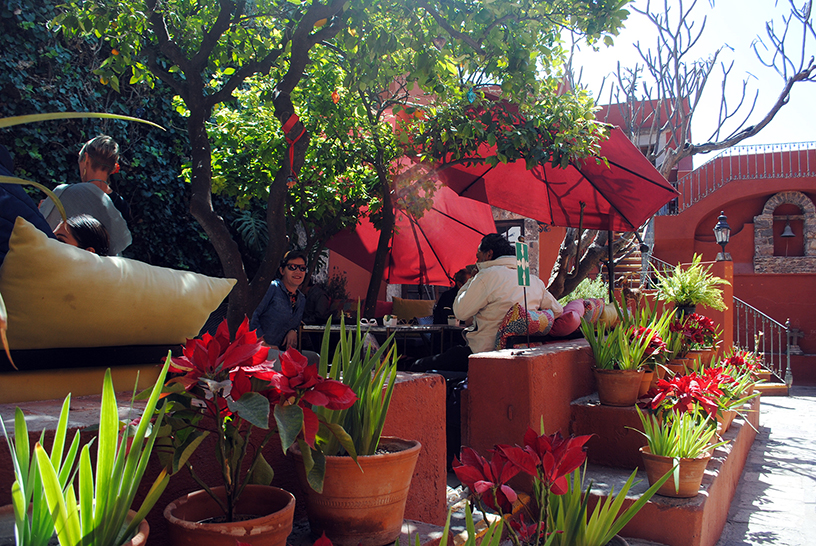
It becomes clear very quickly that Mexico is a haven for many more people than just Mexicans. There are a lot of North Americans and Europeans living in Mexico. In Ajijic, a little town on the Lago de Chapala just outside Guadalajara we have our first experience of the ‘boutique’ side of Mexico where sometimes entire villages are manicured and restored, cultural activities are supported and traditional arts and crafts are brought to the fore. One can often find entire enclaves of expats in the more popular villages together with a steady stream of local tourists. Our breakfast is served in crisp English and on the promenade next to the lake we encounter miles of pink skin and sensible sneakers in addition to a palm tree green with parrots and a veritable blanket of pelicans delicately bobbing on the grey-blue lake.

The centre of Mexico or the Altiplanicie Mexicana, is a plateau with golden grasslands and prickly pear cactuses that reminds us of the South African Free State – to the north it becomes more arid, like the pictures one often sees of the Mexican desert, and to the south of the Central Mexican Plain, Mexico is a proper tropical jungle – but here the cobalt sky stretches forever and the landscape is sparsely populated. We stop in a tiny village at a roadside buffet and gorge ourselves on a selection of delicacies served in big clay pots, with too many options to taste everything, even though the generous cooks would have loved to feed us to the point of bursting. And so we drive inland into the state of Guanajuato, skimming the borders of León (a great scurrying city famous for its leather boots and shoes), before landing in the breathtaking capital of Guanajuato, of the same name.

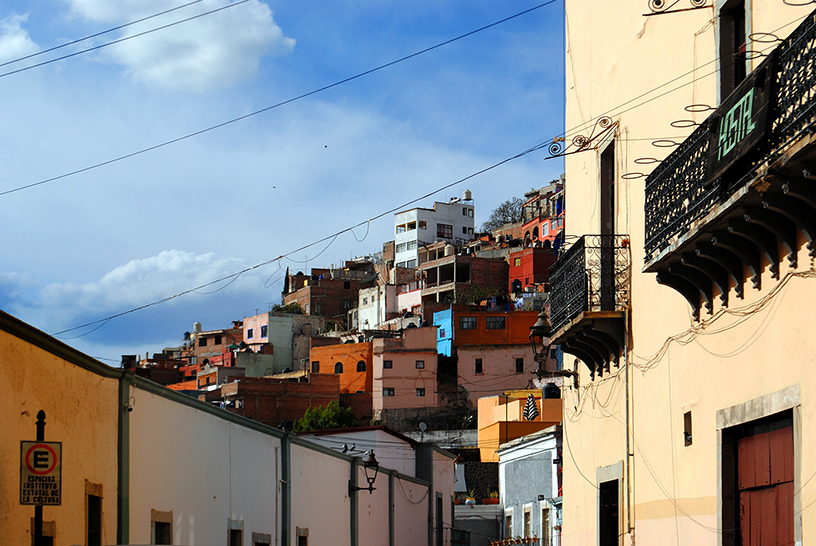
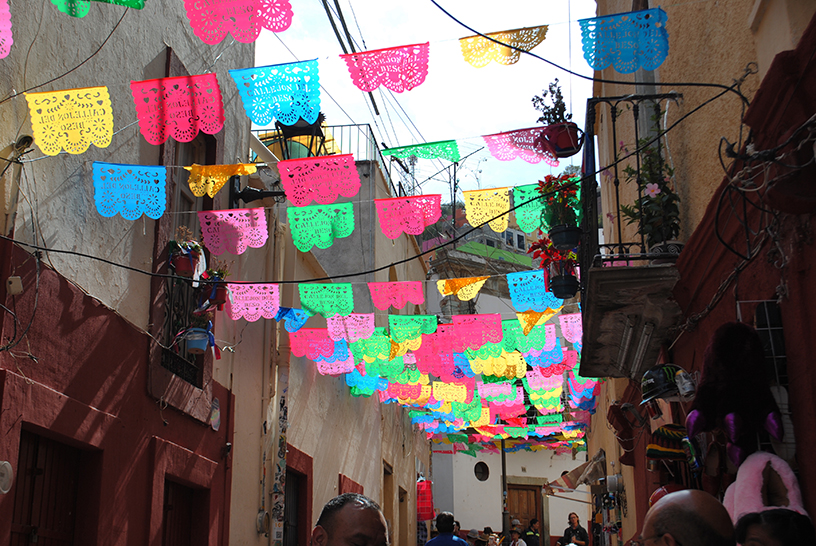

The official name of the state is Guanajuato, Estado Libre y Soberano (Guanajuato, Free and Sovereign State) and one would have to be insensible not to feel the revolutionary spirit and the fierce independence in the air. This state was the cradle and hotbed of the Mexican War of Independence in the early 1800s, and names like Allende, Hidalgo and Morelos become familiar very quickly. In my mind, it always seems early for independence, and indeed, Mexico was the very first colony to gain independence from Spain. They are the frontrunners, the trendsetters, the original revolutionaries.
It is surprisingly easy to fall in love with their history. I’m not drawn to history as a rule, but if the stories are set in the jungle and the heroes have names like pirates or the tales are spun in the dust of a rattling overheated desert noon, it is hard not to get a bit misty-eyed with all the romance.

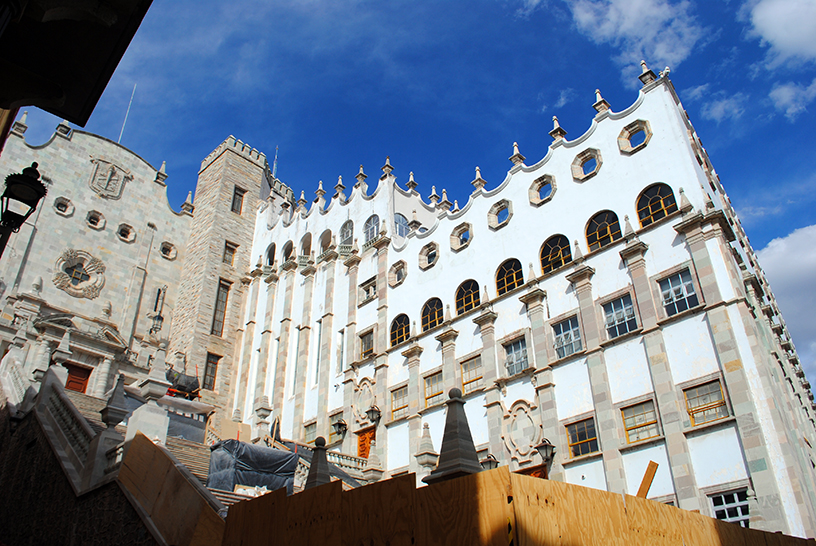

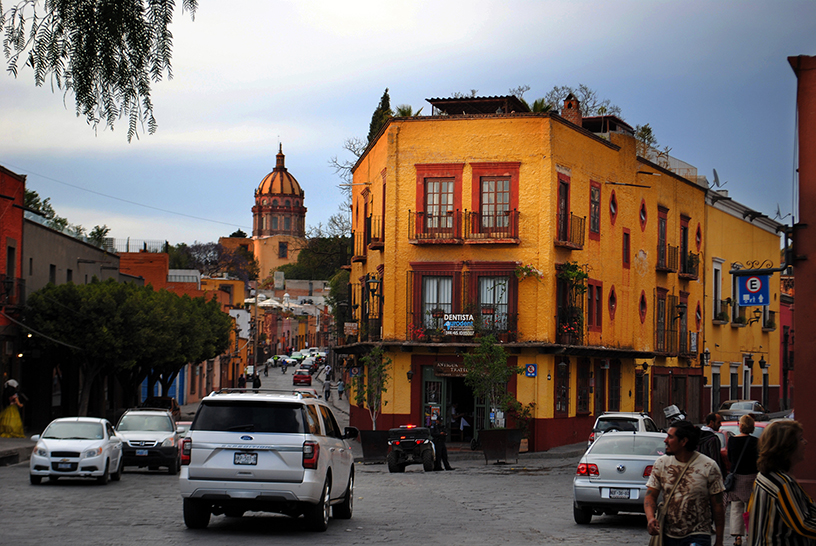
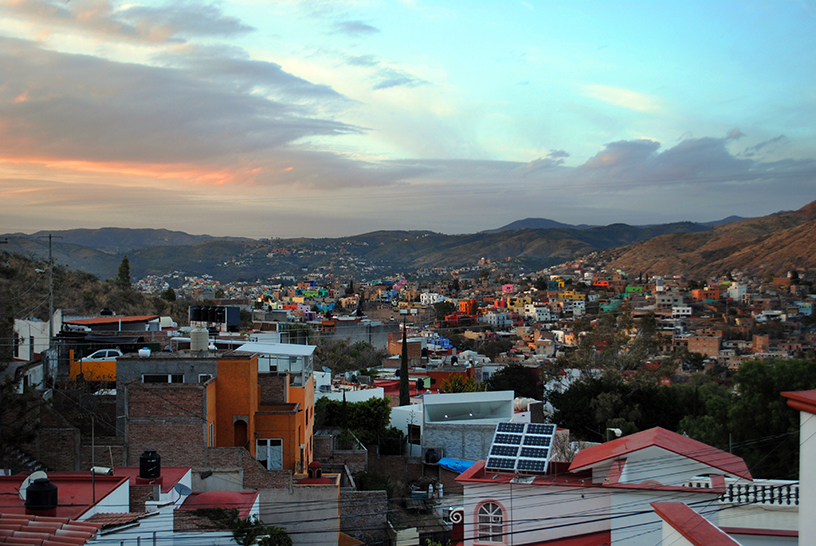
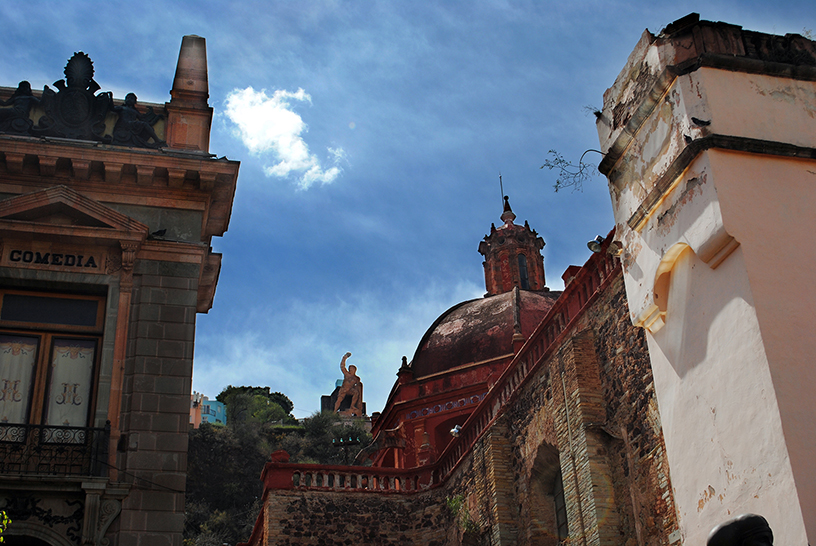
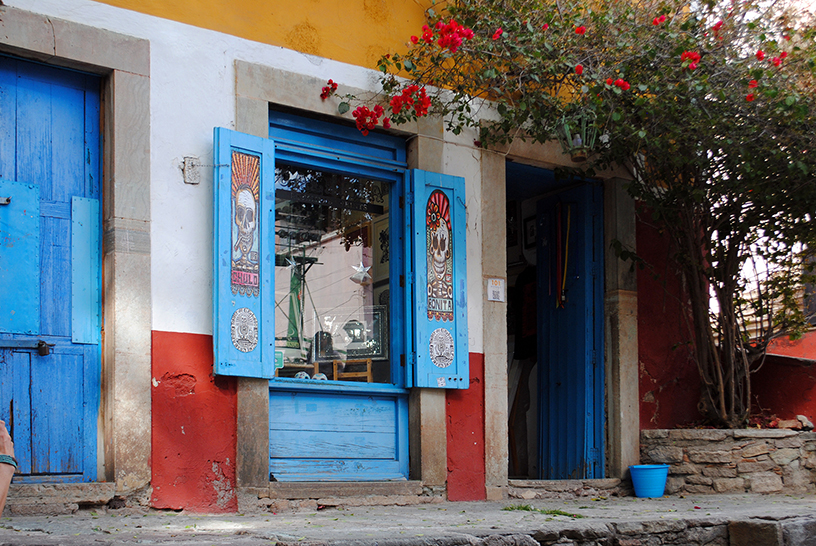
The city of Guanajuato clusters along many hills and around a small valley in cascades of colourful blocks. In the centre the lanes are narrow, the streets are paved or cobbled, and every now and again a gorgeous spire throws a long dark shadow across the street. Tunnels, hanging balconies, terraces and beautiful iron, stone and woodwork makes this one of the most beautiful cities I’ve ever been in. It is a busy, very lively, very exuberant place of vivid colour. That people go to so much effort to make their environment lovely is admirable. It speaks to a rare sensibility, an acute aesthetic and a value system with more meat than greed on its bones. The University towers amongst the iconic pink stone of the area, right in the middle of the centre and judging by our guide’s enthusiasm and the meticulous maintenance in progress it is a place of real pride. Inside we gape at the towering architecture, the art on the walls and listen to the susurration of the students going about their days.
We eat mole and tortillas, chicken and enchiladas on the top floor of a beautiful old restaurant with balconies leaning drunkenly against the buildings on the other side of the street before heading for our house snuggled away far in the colourful hills.
There is far too much to see and feel and taste and hear to cover in two days, so we walk tens of kilometres every day and let as much art and music and history wash over us as possible. Somewhere in the middle of this whirlwind of activity we drag Campbell onto the patio and swamp him with gifts and we take no prisoners when we intensify the celebrations to a fever pitch to mark his fourth decade on the planet. The city, with its many students, holds and coddles and buffers us through a careening night of manic festivities and echoing laughter.
We are almost relieved to leave the next morning when we delicately load ourselves into the car, happy to have deeply drunk from Guanajuato’s generous well.


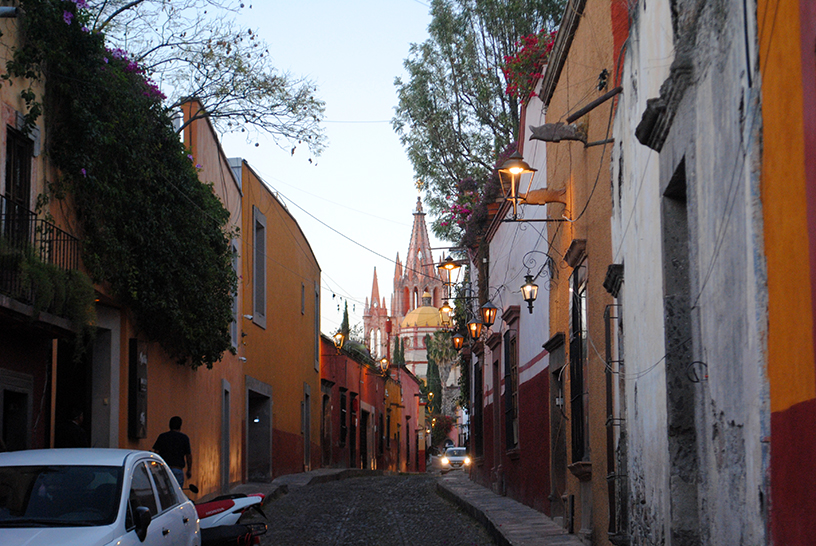
Mexico is well aware of its own magic, fortunately for everyone else. In 2001 Mexico launched its Pueblos Magicos initiative – a federal tourism programme that to date has given this enchanting title to 123 small towns that are in many ways ‘magical’. San Miguel de Allende used to be one of the most radiant of these until it became a UNESCO World Heritage Site in 2008 (an altogether more illustrious designation), together with Atotonilco – a village just a few kilometres away.
They call it El Corazón de México, The Heart of Mexico, in part because it is in the centre of the country, in part because it was the birthplace of Ignacio Allende (a great hero of the Revolution) and the first Mexican town to gain its independence from Spain, but also because of its tremendous cultural and architectural wealth. In the early 20th century artists began to collect amongst the gothic and neo-classical buildings (notably also Diego Rivera and David Alfaro Siqueiros) and the lovely heart of Mexico slowly became truly exquisite.
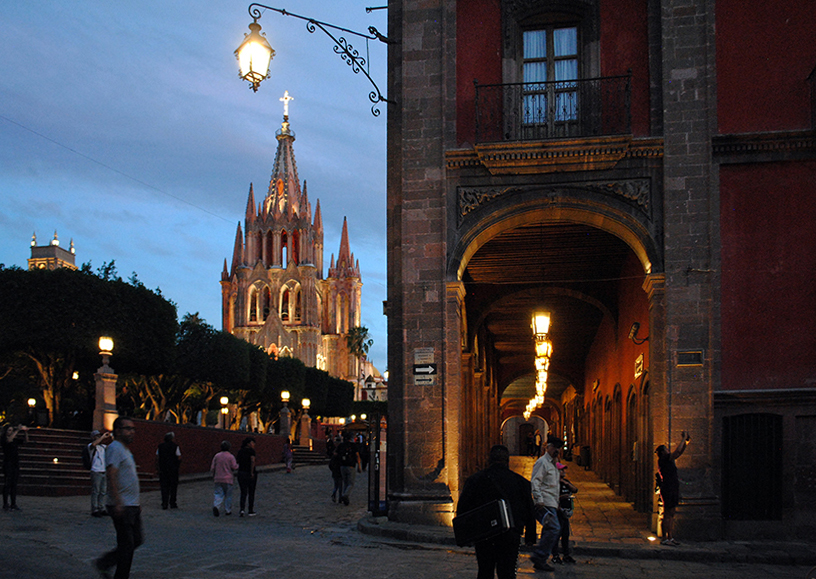
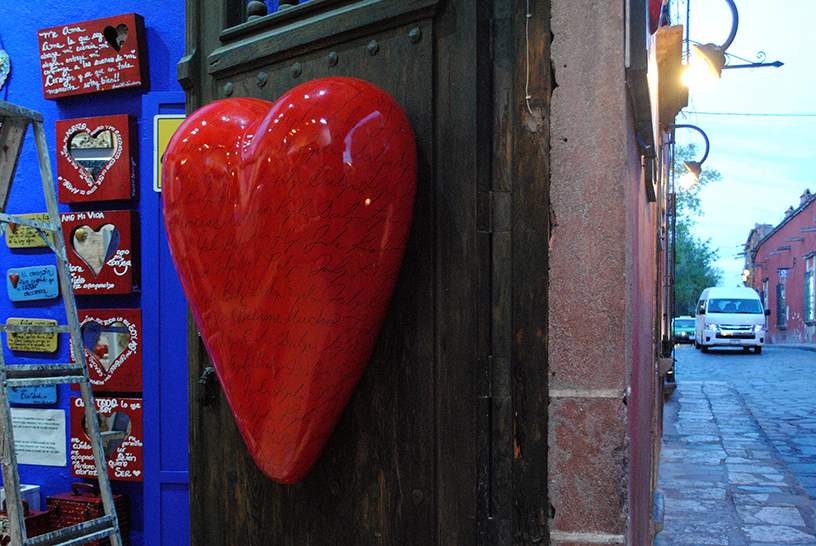
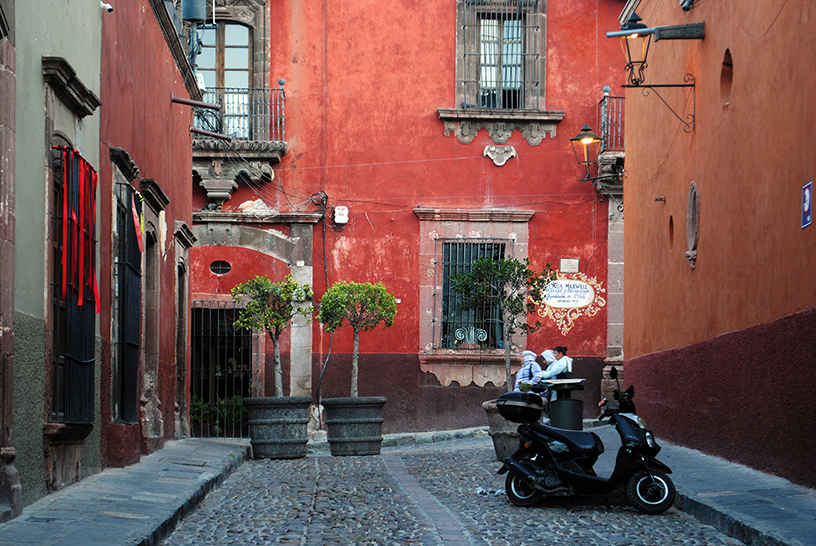
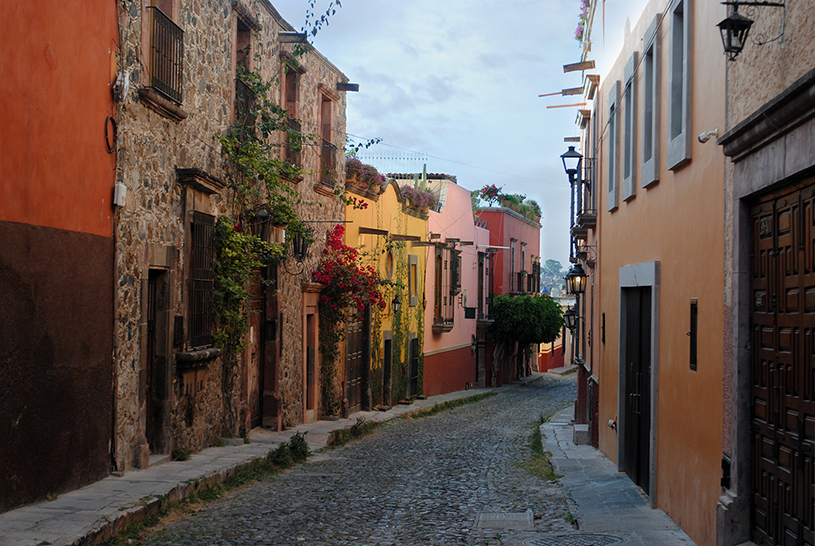

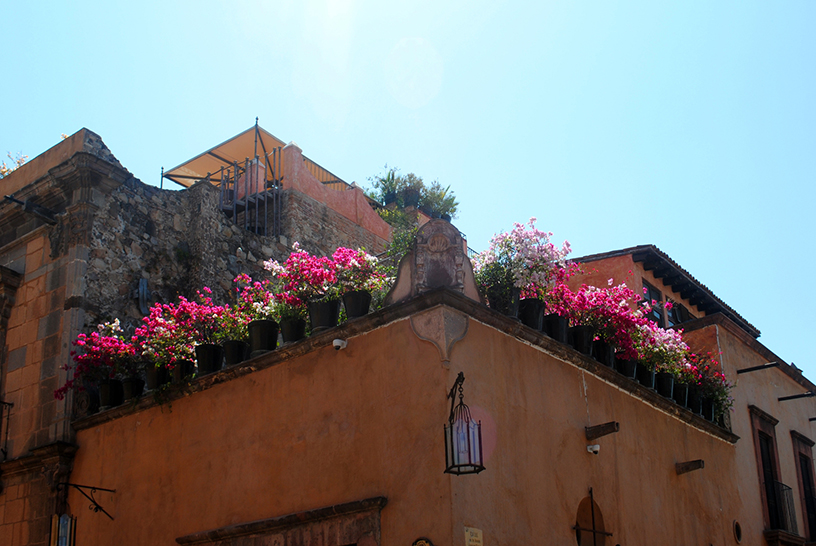
She is like a faintly blushing bride in a crumbling antique lace dress with bits of silk and rare embroidery on her collar and around her hem. Being in her bosom is not unlike a colourful psychedelic dream, at times altogether unreal and at others so soft and fleeting and tentative, it seems like one is living a life already forgotten. It is no exaggeration to say that I’ve never remotely seen anything like it. In the centre, every corner, every ledge, every sidewalk, every doorway, every railing and every knob is curated and buffed and decorated according to the season. It is almost impossible to describe San Miguel de Allende in anything but excessive, flowery adjectives. SMA (as the expats call it) is über quaint.
The light plays in golden or pink or deep orange against the ochre hued walls and new and old bits are seamlessly juxtaposed, highlighting the best of both. The cobbled streets are steep and rough underfoot and we couldn’t but gape at the ancient tottering expats in their impractical shoes.
Between the weavers, the muralists, the potters, the painters, the lamp makers, the músicos, the metalworkers, the chocolatiers, the architects, the cooks, the florists, the sculptors, the restauranteurs, the writers, the woodworkers, the actors, the restorers, the poets, the hoteleros, the doll-makers, the caballeros, the baristas, the taqueristas, the tourists, the tinkerers and the tailors there is hardly an inch to spare. Life here is a riot of events and exhibitions and parades and concerts performed in the many parks and many squares, the smell of tacos al pastor and mezcal perfuming the air.
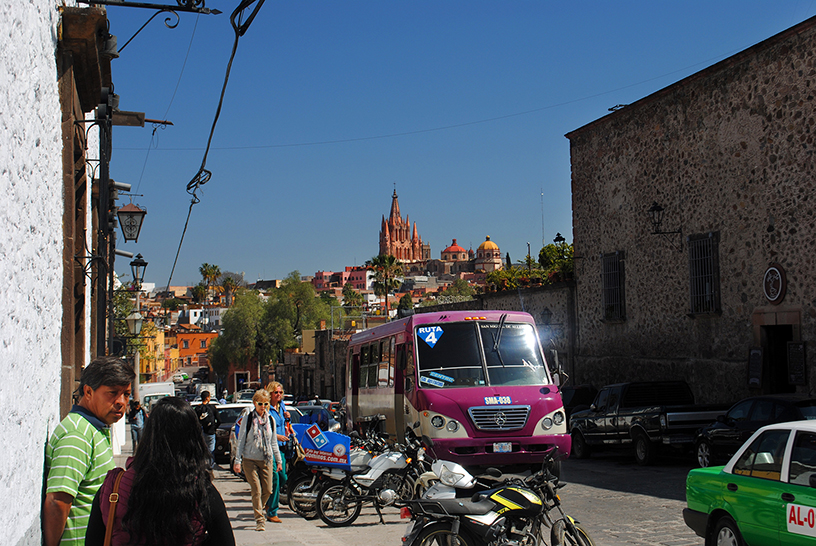
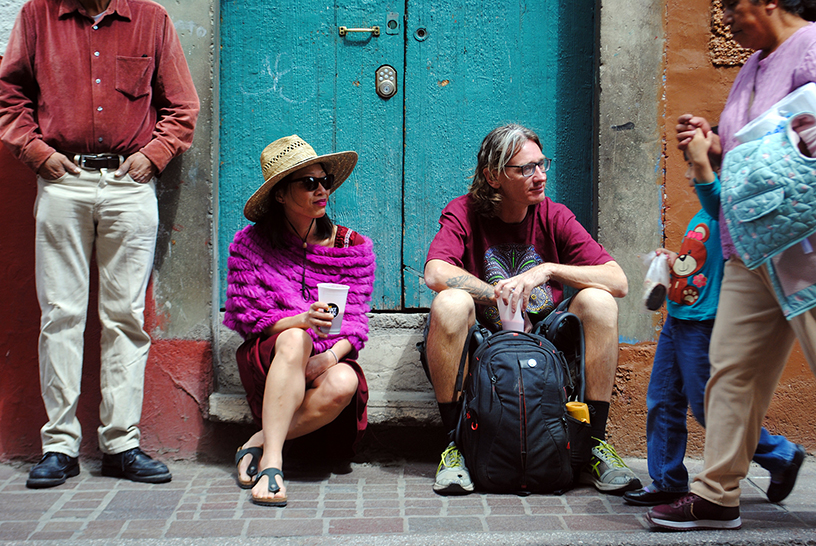

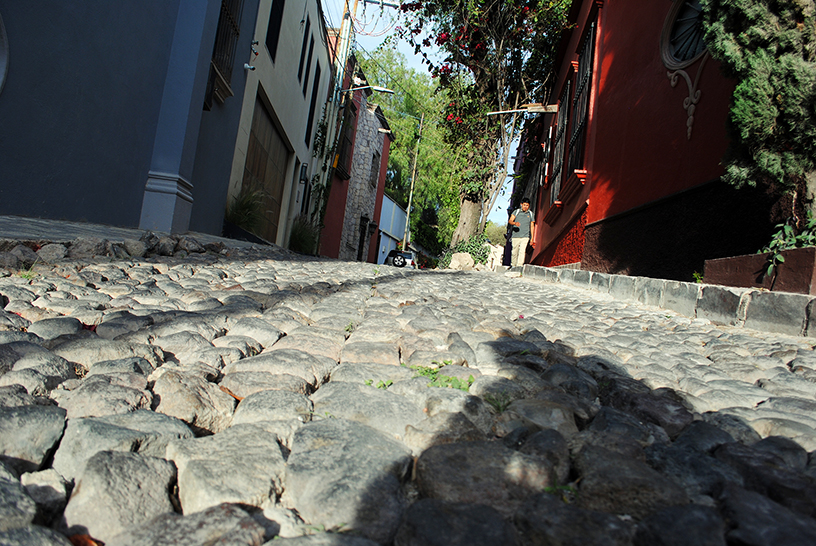
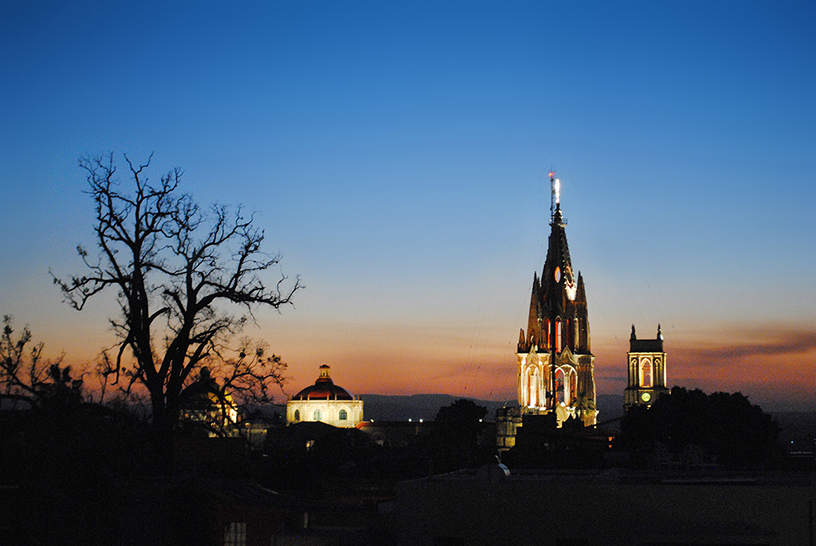
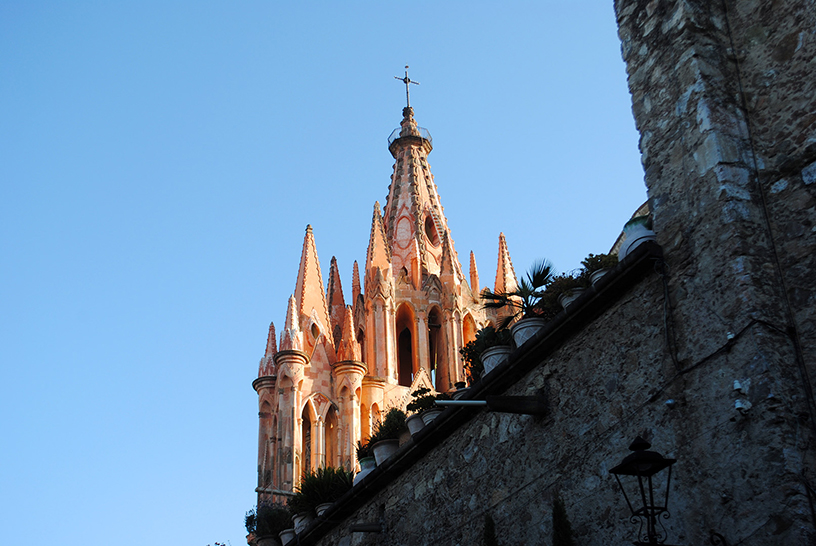
In the centre the La Parroquia de San Miguel Arcángel, the current parish church of San Miguel, rises like a pink neo-Gothic wedding cake between two sky-high palm trees, focusing the fairytale-like character of the town on the hill in the centre. The church faces onto a busy square that looks a little like something imported from Versailles, also overlooked by the Ignacio Allende House, the Canal House and the Palacio Municipal – glorious Baroque and Neoclassical constructions dating from the 17 and 1800s.
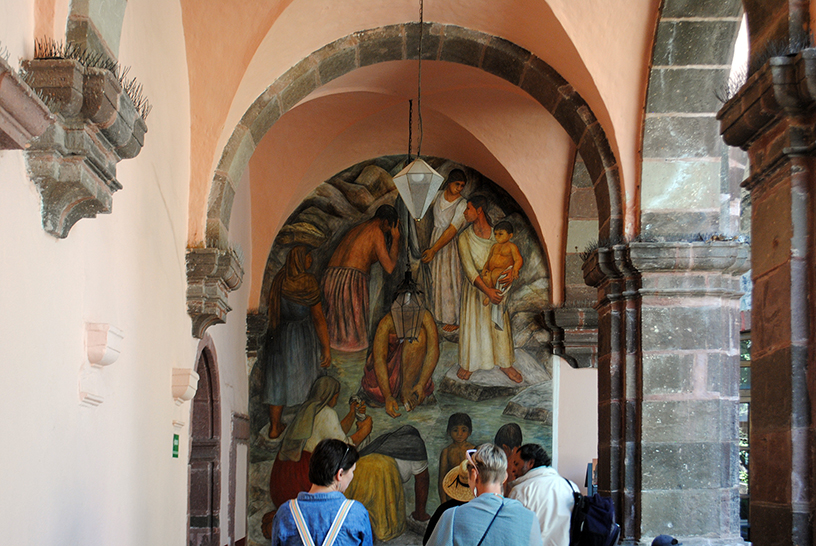
We spend hours in the Escuela de Bellas Artes where we watch weavers and artists bring their dreams to reality and where the air rings with music and scales being practised all through the (what once was) two-story cloister. In one hall of the old convent, there is an incomplete set of murals by David Alfaro Siqueiros, still with construction lines and first layers, making it easier to appreciate his mastery of the medium, his ability to bend space on flat surfaces no matter where you look at it from.
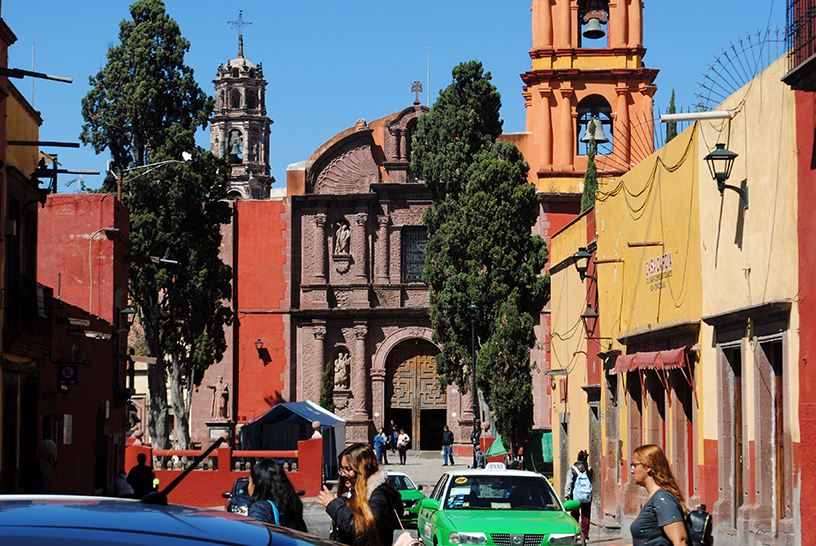


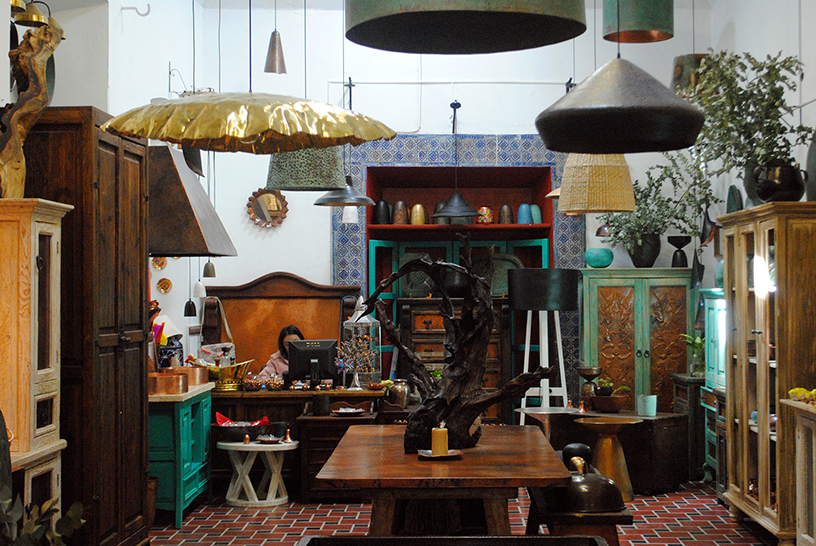
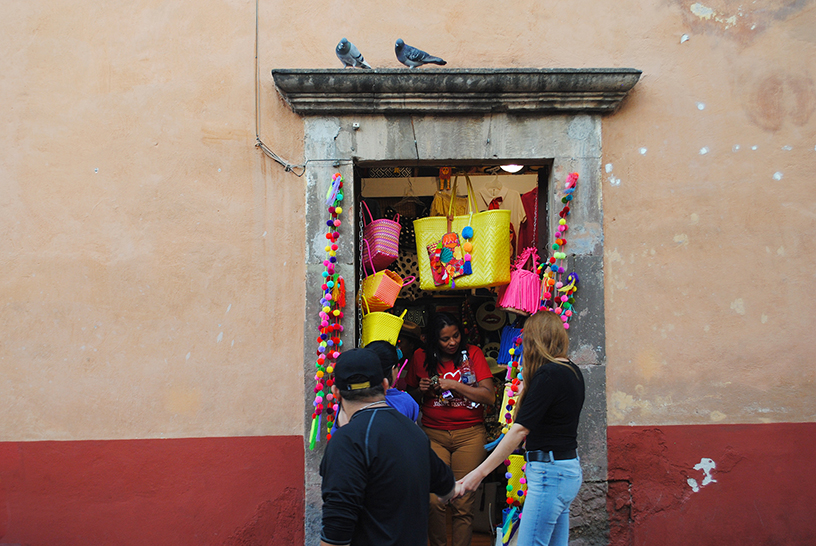
On the last day before my sister and friend from South Africa leave, we trawl every market and shop, every boutique and gallery, stocking up on treasures to wrap carefully before sending them home. San Miguel de Allende is famous for its tin and there are millions of beautifully hammered and painted decorations to choose from. We buy brightly painted pottery and delicate paper flower wreaths, tiny skulls made entirely out of beads and beautifully wrapped local sweets.
We spend a last evening crammed into a minuscule bar where there is hardly space for the little band crooning their hearts out in one corner. It is impossible not to bounce up and down and we take turns falling out the door and hanging in the doorway to give somebody else a chance at the bar.

In the morning, the two intrepid South Africans saddle up and leave for the North while we collapse in fuzzy-delighted but exhausted heaps.
After a day or two of catching our breaths, we slowly venture out again, this time at a much slower pace. We had left the centre and now stayed in a very cool, very quiet, very modern neighbourhood, just a few minutes by taxi from the buzz. We share the house with a precious Señora who merrily potters about every day and on one sunny morning kindly drives us to Atotonilco where we laze about in a hot spring enclosed with a steamy dome of coloured glass, the sun streaming through the haze in blue and green streaks.
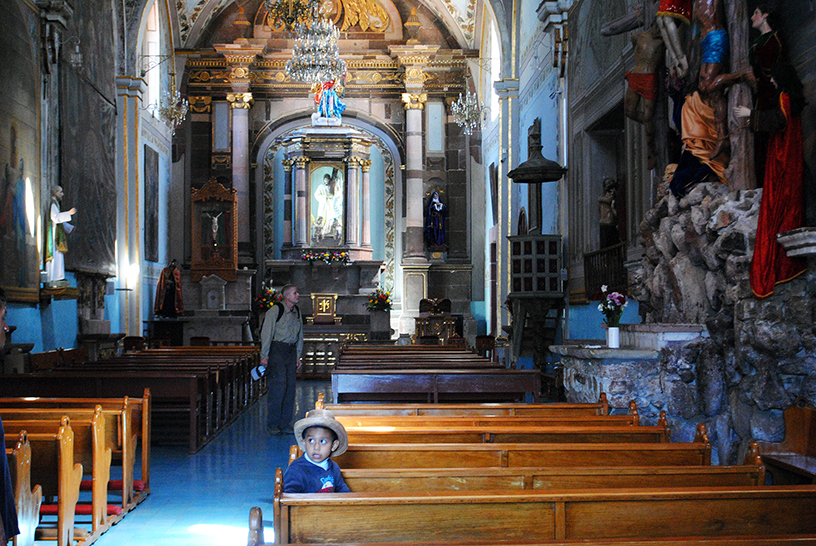
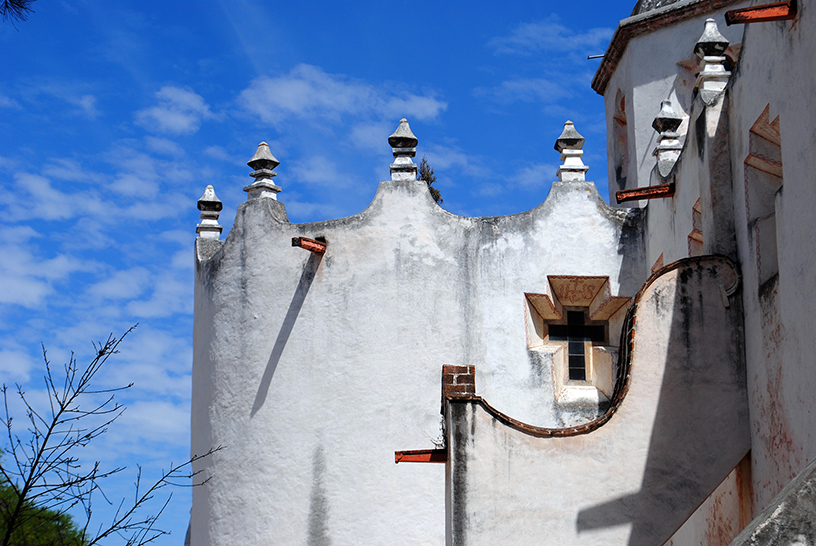
The ancient Santuario de Jesús Nazareno de Atotonilco that was built in the 1600s has gossamer Mexican folk Baroque murals in the nave and along the walls and in the capillas (some parts are called the “Sistine Chapel of Mexico”) and the main altar shines with dizzying detail around the crying Virgin of Sorrows. We are unaware at the time that we are missing the thousands of pilgrims who come to Atotonilco every year to mortify their flesh through flagellation and fasting (in the style of Ignatius of Loyola), but in retrospect, it does throw some light on some of the more macabre displays. This is not a place for religious pansies.
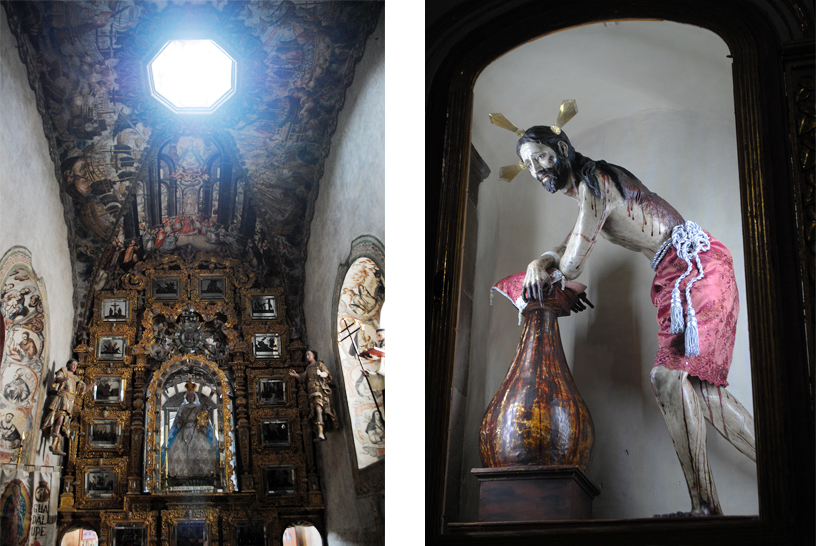
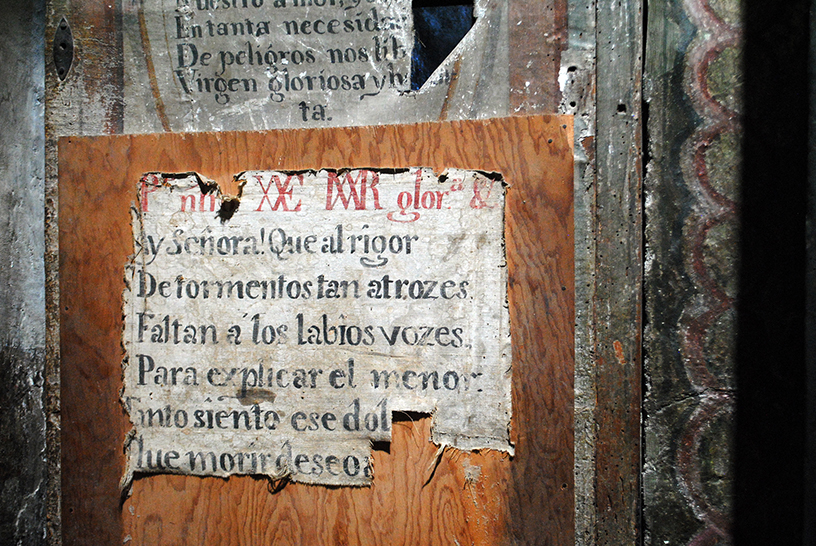


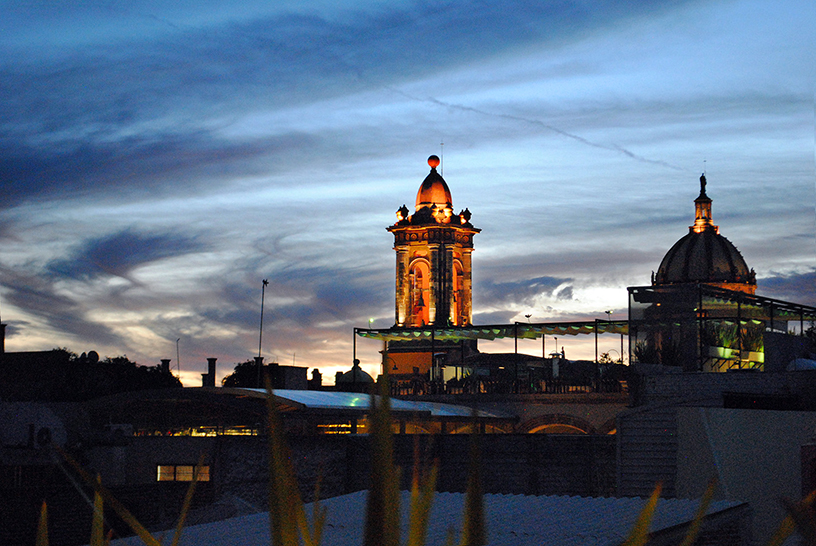
On an otherwise innocent Wednesday we head to town for dinner and find ourselves the lone guests on the balcony of Ocre, a restaurant that we would never have been able to book in its entirety but for a complete meal have all to ourselves. The view looks out between a row of spiky cactus leaves onto two intricate, rounded towers while behind them the sky slowly turns from pink to the deepest velvet blue imaginable. Somewhere between the towers an incongruous rainbow of disco lights is flashing. The food is unusual and delicate, pizza with pears, a blackened tentacle, a flood of dark mole, a smear of garlicky cream. We drink rum and talk to the masterful chef (Xavier Piñero) who is happy to share his ideas about mole and the other elegant flavours on our plates. We feel like royalty.
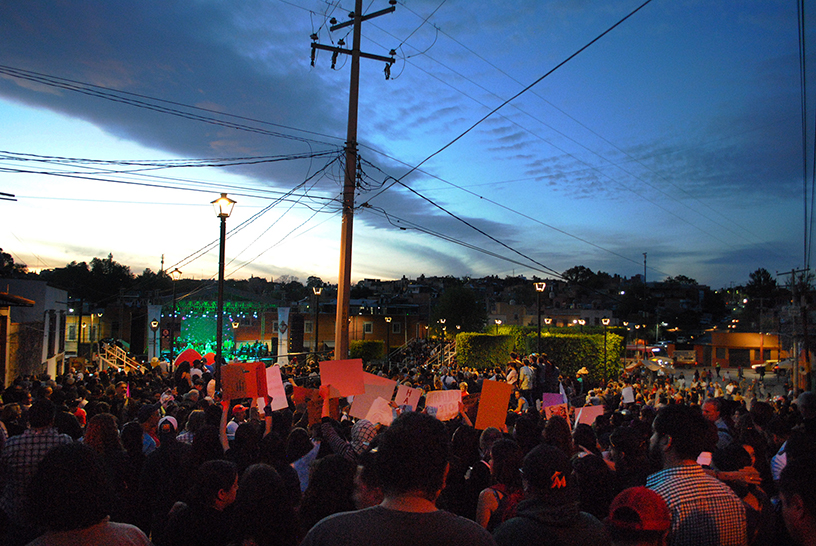
Walking around town at night reveals tunnels and bridges and mythical vistas that stop us in our tracks and have us sharing incredulous smiles with other people pinned to the same spot. On another evening we join a seething concert with music by the Buena Vista Social Club, standing in the street around a packed square. It feels a little like a protest, strident, loud and with lots of speeches in between. A stream of women with placards winds through the crowd loudly chanting – the violence against women that blights the planet is also a big problem here, and the women are not afraid to scream and stomp their rage.
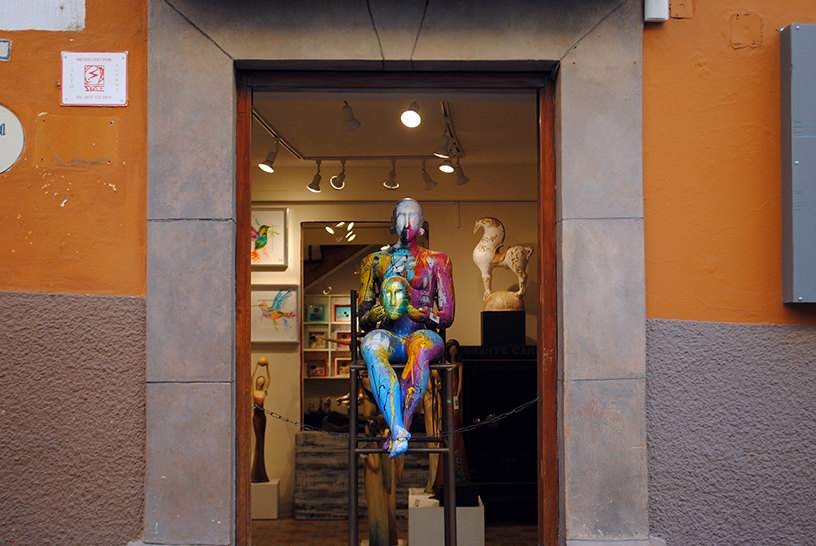

If somebody had asked me before where the most romantic place on the planet was, my mind would have flown somewhere to Europe, to some wildflower dappled hamlet in the Alps or perhaps to one of the luminous fishing villages on the Iberian coast, but that was before Mexico. Before the golden afternoon sun and the fluttering flags, before the smiles and the cobbles, the music and the art. Before the food. Before I had encountered the delicate sensibilities and the luscious humanity that is all Mexican…
Slowly news of the Coronavirus starts to seep into our realities, it is the middle of March when we leave San Miguel de Allende, and already we anticipate having to find a place we can stay in better isolation, further away from the crowds, easier to supply. We make plans tentatively, unsure, speculating wildly, knowing nothing.